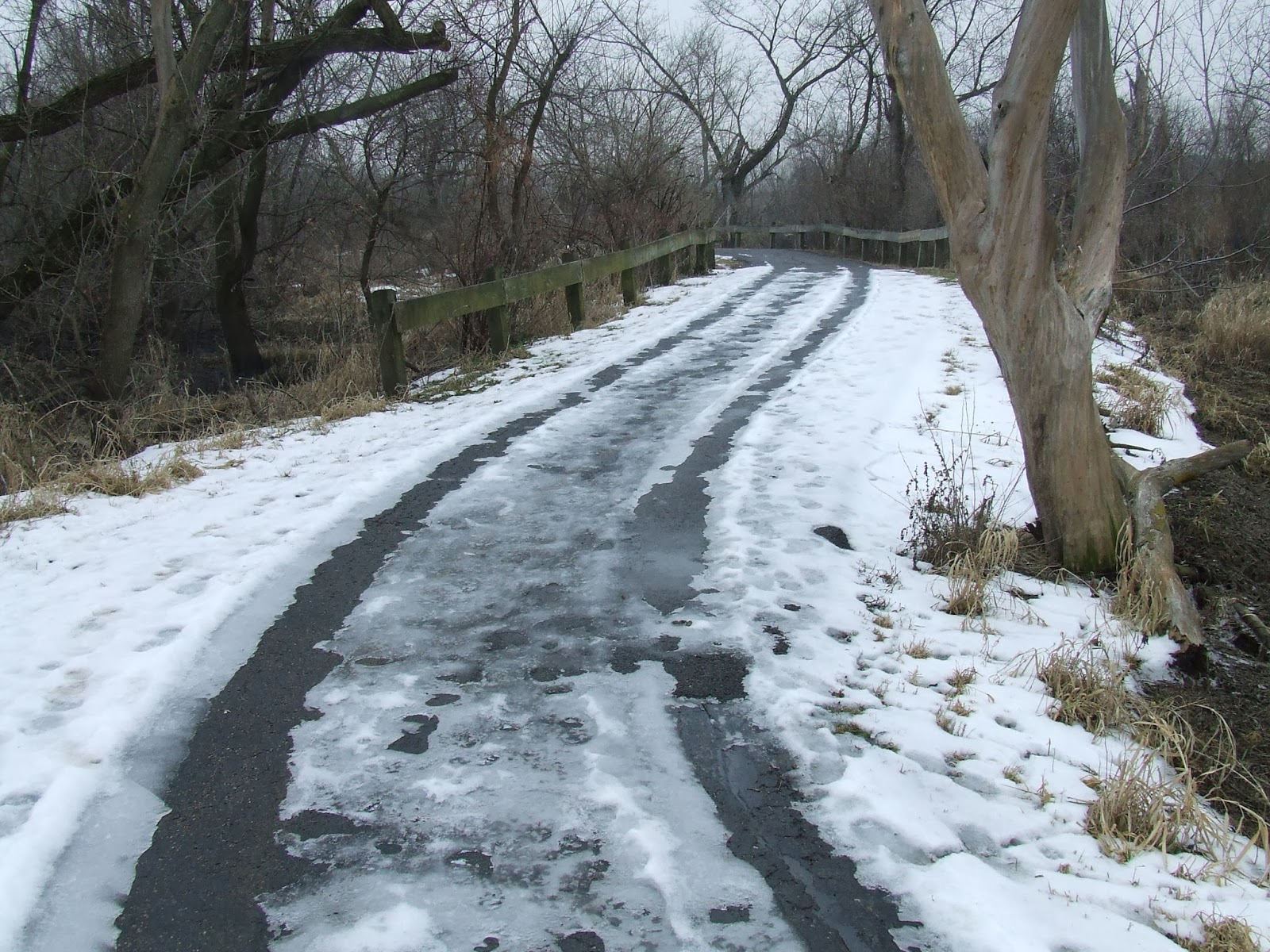
Probably the best known poem about a wall is “Mending Wall” by Robert Frost. I sometimes wonder if he ever regretted writing it. The most often quoted line, “Good fences make good neighbors,” has become a proverb. But if you read the whole poem (see link below), you will find that the “truth line” (to use a term I learned from Ellen Kort, first Poet Laureate of Wisconsin) is: “Something there is that doesn’t love a wall.”
Another
poet who has written about walls is William Marr. Marr was born in Taiwan and
came to the U.S. in the 1960s to attend graduate school. Marr writes in
Chinese, and translates his own poems into English, sometimes with a little
help from his friends. He has written poems about both the Great Wall of China
and the Berlin Wall.
The Great Wall
1The struggle between civilization
and barbarism
must be ferocious
See this Great Wall
it twists and turns
with no end in sight
2
What valor
to climb the ragged ridge
and to look long and hard
through a self-adjusting lens
at the skeleton of the dragon
that sprawls miles and miles
in the wasteland
of time
~
William Marr
“The
Great Wall” was published in Eastlit, August 2013.
Berlin Wall Peddlers
History
on sale
One
chunk for only twenty dollars
Look
at this one
it's
full of bullet holes
this
one is stained with deserters' blood
and
see these two dark holes
they
were burned by an anxious gaze
the
remains of cold war on this one
still
make you tremble
and
what we have here
are
the dancing footprints of the youth
and
the shouting and clapping
when
a heavy chain tore it down
Our
supply is abundant
after
the Berlin Wall
we'll
tear down the walls
between
the
rich and the poor
the
fortunate and the unfortunate
the
oppressors and the oppressed
and
of course we always have
the
inexhaustible walls
between
the hearts
of
indifference
~
William Marr
“Berlin
Wall Peddlers” was published by the Compassion Education Institute in a
collection of poems about the Berlin Wall. You can find a bio for William Marr
on his art and poetry website at http://feima.yidian.org/bmz.htm.
Click on Chinese or English, then on biography.
F.J.
Bergmann’s prose poem, “Wall,” is as different from Marr’s poem in content as
it is in form:
Wall
My neighbor said he thought he'd build a wall; wanted to know if I'd go halves on it. I asked him what he was going to make it out of and he said "Words," and I said I'd help him out as much as I could. I asked him how high he was going to make it and he said "High."
He
started out with long, Latinate words, at least five syllables, carefully
staggering the joints, but he ran out of his own almost right away, so I had to
give up a lot of mine. He tried to maintain a structured form, but soon it
degenerated into a random jumble, mostly nouns and verbs—he was saving the
adjectives to decorate it when it was finished, he said, stacking them neatly
against the porch. The articles and conjunctions kept falling out and
accumulated in forlorn drifts at its base.
He
worked on it every evening, after coming home from his regular job, until night
fell, late into the autumn. Joggers would occasionally stop to offer advice and
put in a word or two. It spread like a blackthorn hedge above its massive
foundation, tangling tightly as the barbed serifs hooked together. The wind
whistled through the small openings of the a's and e's as the larger counters
of the o's, b's, d's, p's, and q's resonated at a lower pitch. He placed the
sharpest words along the top of the wall. "Expect trouble," he said.
During
the winter, the ascenders and descenders began to distort and twine around
letters in adjoining words. Just before the solstice, I hung the most ornate
plural nouns and third-person-singular verbs I could find on the north side of
the wall. Dangling from each terminal s, they swung like bells, chiming as the
snows fell. That spring, suffixes sprouted from the side that faced the sun.
©2002 F.J. Bergmann
"Wall"
appeared in the Wis. Academy
Review Vol. 50 #4. It won the 2004 Pauline Ellis Prose Poetry Prize.
You can find a bio for F. J.Bergmann at http://www.wfop.org/fj-bergmann/.
More
wall and fence poems:
This
list includes rhymed and metered poetry, free verse, prose poetry (and at least
one “experimental poem”); serious and humorous poems; old poems and recent creations;
political poems (from a Japanese internment camp poem to the Berlin Wall and
even Brexit); nature poetry; poems about relationships between people and poems
about relationship between peoples; and even a cowboy poem. These poems from a
number of different countries and time periods will give you a sense of the
breadth of possibilities for a wall or fence poem. I have starred some that
were new to me that I especially like.
“Near
the Wall of a House” by Yehuda Amichai - https://www.loc.gov/poetry/180/074.html?loclr=lsp1_rg0001
“That
Damned Fence” by Anonymous - http://parentseyes.arizona.edu/wracamps/thatdamnedfence.html
“Language
is a Fence” by Doug Bolden - http://www.wyrmis.com/blots/2016/15/blot52156-language-is-a-fence.html
“A
Wall” by Robert Browning - https://www.poemhunter.com/poem/a-wall/
“The
Bird Fence” by JD DeHart - https://literaryyard.com/2014/05/05/poem-the-bird-fence/
“Fence
of Sticks” by Deborah Diggs - https://www.poets.org/poetsorg/poem/fence-sticks-audio-only
“Mending
Wall” by Robert Frost - https://www.poetryfoundation.org/poems-and-poets/poems/detail/44266
“Poem
for a Hospital Wall” by Diana Hendry - http://www.scottishpoetrylibrary.org.uk/poetry/poems/poem-hospital-wall
“Walking
Through a Wall” by Louis Jenkins - http://cottertherealdeal.blogspot.com/2011/06/walking-through-wall-prose-poem-by.html
*“Where
There’s a Wall” by Joy Kogawa - http://www.poetryinvoice.com/poems/where-theres-wall
“The
Ambulance Down in the Valley” by Joseph Malins
- http://www.tonycooke.org/stories-
and-illustrations/ambulance_valley/
“The
Fence” by Leanne Modan - http://www.riddlefence.com/submissions/
“Fences”
by Pat Mora - https://www.poetryfoundation.org/poems-and-poets/poems/detail/51855
*“Wall”
by Norman Nicholson - http://www.poetryarchive.org/poem/wall
“The
Fence” by Lenrie Peters - https://afrilingual.wordpress.com/2011/11/04/the-fence-lenrie-peters/
“The
Cat Who Walks Through the Wall” by Shang Qin, translated by Michelle Yeh - http://www.poetryinternationalweb.net/pi/site/poem/item/1066/auto/0/THE-CAT-WHO-WALKS-THROUGH-THE-WALL
“A
Fence” by Carl Sandburg - https://www.poemhunter.com/poem/a-fence/
“The Fence that Me and Shorty Built” by Red
Steagall - http://www.cowboypoetry.com/redsteagall.htm#Fence
“Fence”
by Douglas Stewart - http://www.poetrylibrary.edu.au/poets/stewart-douglas/fence-0344021
*“After
a Rainstorm” by Robert Wrigley - http://www.poetryoutloud.org/poems-and-performance/poems/detail/54867
Poems
about the Berlin Wall - http://voiceseducation.org/content/berlin-wall-poetry-wall
and http://voiceseducation.org/content/wall
The
March Challenge:
By
now, I’m sure you have figured out that the March Challenge is to submit a poem
featuring a wall—a literal wall or a metaphoric wall. For this challenge we
will exclude memorial walls such as The Vietnam Memorial Wall in Washington,
D.C., because they will be appropriate to an upcoming challenge.
Title
your poem unless it is haiku or another form that does not use titles. If you
use a form, please identify the form when you submit your poem. Single-space and
don’t use lines that are overly long (because the blog format doesn’t
accommodate long lines). Please do not indent or center your poem on the page,
put it in a box or against a special (even white) background.
You
may submit a published poem if you retain
copyright, but please include publication data. This applies to poems
published in books, journals, newspapers, or on the Internet.
The
deadline is March 15. Poems submitted after the deadline will not
be considered. There is no charge to enter, so there are no monetary rewards;
however winners are published on this blog. Please don’t stray too far from
“family-friendly” language. No simultaneous submissions, please. You should
know by the end of the month whether or not your poem will be published on this
blog. Decision of the judge or judges is final.
Copyright
on each poem is retained by the poet. If a previously unpublished poem wins and
is published elsewhere later, please give credit to this blog.
How
to Submit Your Poem:
Send one poem only to wildamorris[at]ameritech[dot]net (substitute the @ sign for “at” and a . for “dot”). Put “January Poetry Challenge Submission” in the subject line of your email. Include a brief bio which can be printed with your poem if you are a winner this month. Please put your name and bio under the poem in your email.
Send one poem only to wildamorris[at]ameritech[dot]net (substitute the @ sign for “at” and a . for “dot”). Put “January Poetry Challenge Submission” in the subject line of your email. Include a brief bio which can be printed with your poem if you are a winner this month. Please put your name and bio under the poem in your email.
Submission
of a poem gives permission for the poem to be posted on the blog if it is a
winner, so be sure that you put your name (exactly as you would like it to
appear if you do win) at the end of
the poem. Poems may be pasted into an email or sent as an attachment (no pdf
files, please). Please do not indent the
poem or center it on the page. It helps if you submit the poem in the
format used on the blog (Title and poem left-justified; title in bold (not all
in capital letters); your name at the bottom of the poem). Also, please do not
use spaces instead of commas in the middle of lines. I have no problem with
poets using that technique (I sometimes do it myself). However I have
difficulty getting the blog to accept and maintain extra spaces.
Poems
shorter than 40 lines are generally preferred but longer poems will be
considered.
©
Wilda Morris